
Why Internal Cueing Is Making Your Pitchers Worse: The Science of Self-Gathering

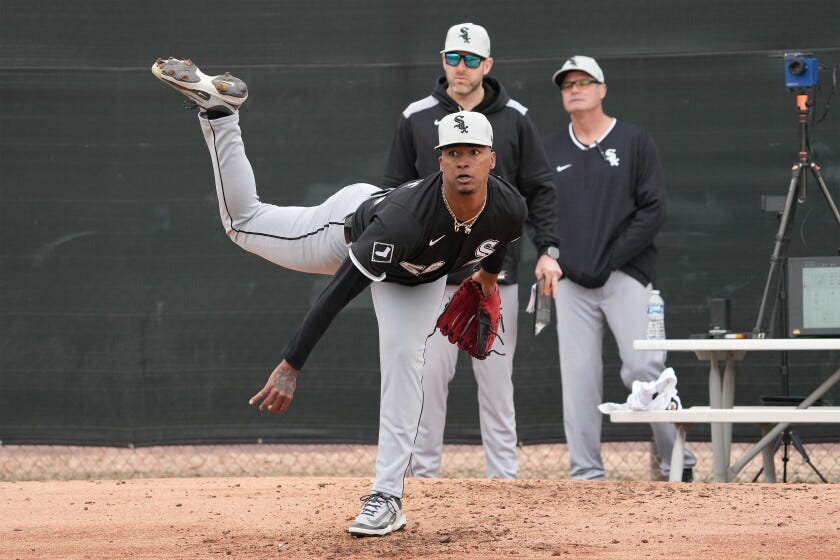
Walk into almost any pitching development environment and you’ll see the same interaction play out nearly every time. A pitcher throws, the coach reacts, and a verbal cue follows. The pitcher tries to apply this new cue to his next throw.
“Feel the hinge” “Get your elbow up” “Stay shorter with your arm” “Stay back”
The assumption that directing a pitcher’s attention toward his own body parts produces a lasting mechanical improvement is not only unproven, but the research suggests it actively works against the goal. Across thousands of pitchers who have trained at Driveline, the movement data backs that up.
What the Constrained Action Hypothesis Actually Says
Gabriele Wulf and colleagues proposed the Constrained Action Hypothesis in 2001 after a series of studies testing how attentional focus changes motor skill execution. [1]. Their thesis was clear: when athletes direct attention inward toward the mechanics of their own movement, they trigger deliberate, conscious motor control processes that interfere with the automatic processes already regulating that movement.
The use of “constrained” in the hypothesis refers to the motor system itself. Internal focus constrains it. It reduces the degrees of freedom available to the nervous system and produces measurably worse outcomes. You are forcing step-by-step conscious processing onto a movement designed to be automatic.
External focus refers to directing attention toward the effects of movement rather than the movement itself. It allows the motor system to operate under the nonconscious, reflexive control it was built for: more effective, more efficient, without the interference of deliberate monitoring.
The EMG Data
The neuromuscular evidence on this is strong. Studies using electromyography (EMG) across free throws, dart throwing, and vertical jumping consistently find that external focus produces lower overall EMG activity than internal focus, while simultaneously producing better accuracy, higher force output, and more efficient movement timing [2]. When athletes focus internally, the nervous system over-recruits, larger motor units fire when they shouldn’t, The system ends up working against itself [3].
The body under internal focus is not working more precisely. It is working harder while producing suboptimal results.
The motor learning literature is consistent: external cues produce cleaner movement patterns and higher peak velocity than internal cues. This is easily explainable, internal cueing drives co-contraction and neuromuscular noise that bleeds force before it ever reaches the ball.
What we observe at Driveline tracks with that research. Pitchers who clean up their motor control environment often move more efficiently and for some, that efficiency translates to velocity gains without any change in physical capacity. The arm isn’t always the limiter. Sometimes it’s the signal being sent to it.
What Self-Gathering Actually Looks Like
The nervous system is a self-organizing system. Give it the right environment and it finds efficient movement on its own. The coach’s job is to build that environment, not micromanage it or try to install solutions verbally.
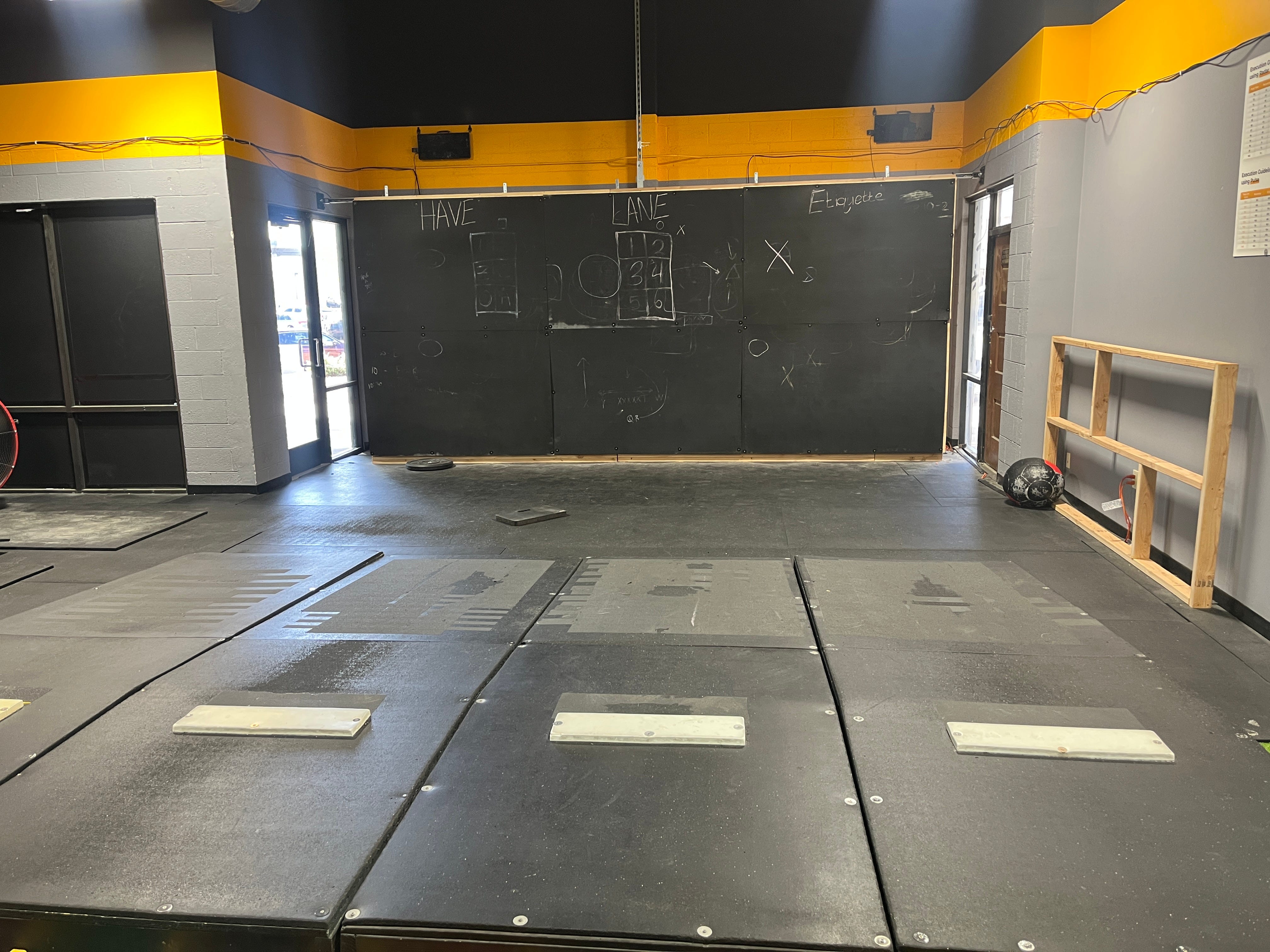
While the examples are endless, here’s one that many pitchers run through on autopilot while searching for the right internal cue. A plyo ball thrown into a wall is not solely a drill. It is a feedback loop. The ball’s contact point, spin, and rebound trajectory deliver immediate, honest information about what the arm actually did. That feedback is richer, faster, and more mechanically honest than any verbal cue, and more accurate than the human eye. It arrives without triggering the conscious control cascade that verbal instruction produces. The target on the wall is an external anchor, the ball is the feedback medium. The pitcher is solving a movement problem, not executing a checklist.
What This Means for How We Coach
Implementing this requires a genuine change in coaching behavior, not just vocabulary. This doesn’t mean mechanical cues have no place. There are times a movement pattern may be creating injury risk, or a specific technical limitation that’s hindering output where intervention makes sense. The distinction is between using internal cues as a default developmental tool versus using them intentionally for a specific, identified problem. One has a poor track record. The other has a job.
Use the environment to do the coaching that cues cannot. Constraint drills, weighted implement variations, throwing targets, and task structures that make the correct pattern the only viable solution are not supplementary to coaching, they are an important instructional medium. A well designed drill teaches more in ten throws than twenty minutes of verbal feedback. The implements and environments are the curriculum.
Trust the nervous system. It has been solving complex movement problems since the athlete picked up a ball as a child. The coach’s job is to design better problems, better task environments, better feedback structures, and better constraint progressions, not to narrate internal cues.
The Takeaway
Internal cueing does not make pitchers better at pitching. It makes them better at executing checklists during practice — a skill that transfers poorly to competition and degrades fastest when the game is on the line.
External focus, task-based constraints, and outcome focused feedback produce measurably different physiology: lower EMG activity, better neuromuscular coordination, higher force output, and movement patterns stable enough to translate when skill matters most.
References
Wulf, G., Höß, M., & Prinz, W. (1998). Instructions for motor learning: Differential effects of internal versus external focus of attention. Journal of Motor Behavior, 30(2), 169–179.
Marchant, D.C., Greig, M., & Scott, C. (2009). Attentional focusing instructions influence force production and muscular activity during isokinetic elbow flexions. Journal of Strength and Conditioning Research, 23(8), 2358–2366.
Lohse, K.R., Sherwood, D.E., & Healy, A.F. (2010). How changing the focus of attention affects performance, kinematics, and electromyography in dart throwing. Human Movement Science, 29(4), 542–555.