
Mobility, Stability, Strength - The Progression Behind Skill Development

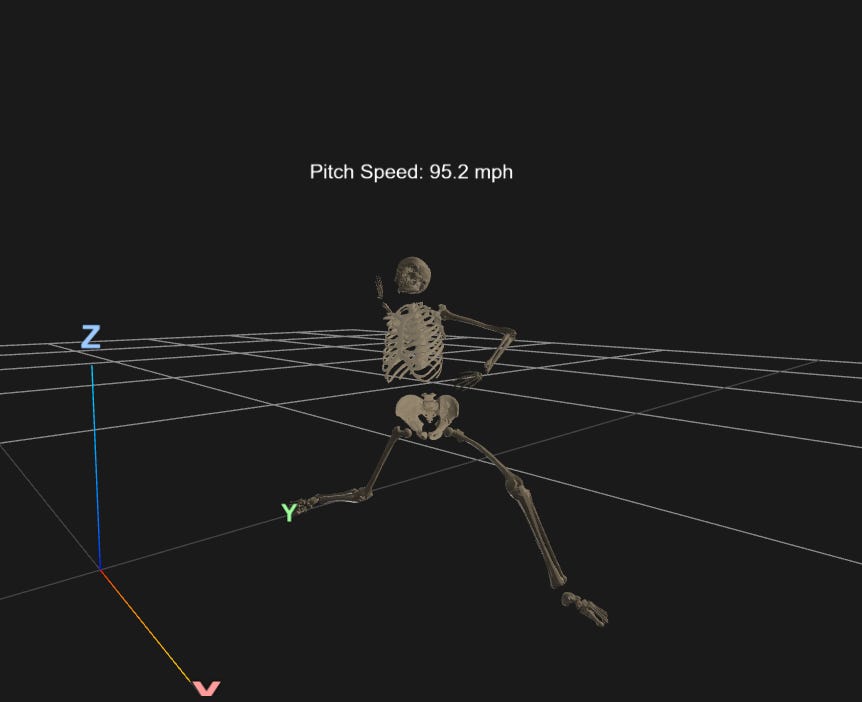
How physical capacity unlocks what the skill side is trying to build
Strength for pitchers isn’t a one way choice between “general athletic training” and movement-specific preparation. Every pitcher needs a baseline of strength before any of the more specific work matters. The real question is where a given athlete sits on that continuum, and whether their physical foundation can actually support what the skill side is trying to build.
When evaluating a pitcher’s physical capacity on the performance side, we’re not just asking “is this athlete strong?” We’re asking whether the body can meet the demands the skill is placing on it and whether those demands are even reachable given where the physical foundation sits currently.
The answer almost always runs through the same three-step sequence:
Can the body get there? Can the body resist there? Can the body produce from there?
Mobility. Stability. Strength. In that order, because each layer is built on the one before it.
Mobility - Can We Actually Get Into the Position?
Before we try to generate force, we need to have access to the specific movement.
Mobility is the body’s ability to move through a range of motion with control. It’s the prerequisite for everything downstream. In pitching specifically (though same goes for all athletic movements) there are mobility demands that directly determine whether a delivery can create force efficiently or whether the body has to create compensations.
We’ll use lead leg blocking as our example throughout - specifically, the hip’s ability to resist force against the plant leg.
For the block to work, the hip has to move through two things in order. It needs to externally rotate as the pitcher drives down the mound, getting into the right position to accept force at landing. Then it internally rotates through delivery, absorbing that force instead of leaking it. You need both. If either end of that range isn’t there, the block either doesn’t fully form or it gives out.
This fix doesn’t live in cues, constraint drills or internal focus, it starts in the weight room.
Mobility isn’t something you passively stretch out on the side. It’s the physical requirement for accessing the positions a delivery demands. A skill coach can describe a position correctly and cue it perfectly, but if the body can’t get there, no cue or feel will fix it. Finding and addressing those limitations is where this work actually starts.
Stability - Can You Resist Once You’re There?
Getting into a position and being able to use it are two different things. The range means nothing if the body can’t hold structure once it’s there.
Stability is the body’s ability to resist force. To maintain structure under load so energy transfers up the chain rather than leaking out through compensation. In pitching, the two moments where this gets tested are landing and deceleration.
At foot strike, the lead leg can absorb forces over 100% of body weight. A pitcher who can get into a good position at landing (thanks to the mobility) but can’t resist through it (stability), collapses into more flexion at the knee, loses the hip angle, or lets the pelvis dump. Instead of converting energy that should transfer up the kinetic chain, he’s losing it to compensations. The trunk has nothing to rotate off of and the arm has to pick up the slack.
That’s reactive strength. Not raw strength, but stiffness. The ability to absorb force and redirect it without losing structure.
These are the movement patterns pitching coaches are trying to build on the mound. When a pitcher’s lead leg can truly stop forward momentum, hip-shoulder separation becomes more accessible, the trunk can rotate harder off a stiffer base, and the arm tends to clean up without the coach ever touching it.


Strength - Can You Produce Force From There?
Once the body can get into a position and resist through it, the third question becomes the one everyone wants to start with: can we produce force from there?
Strength in pitching is the capacity to generate force in the patterns that actually show up in the delivery. In our lead leg block example, that means leg extension, hip internal rotation, trunk rotation, and the posterior chain absorbing everything from foot strike through release.
This is where engine comes in. A pitcher’s strength capacity sets his velocity ceiling. The relationship between lower-half and rotational strength and fastball velocity is well established. Not because bigger muscles mean more arm speed, but because a stronger athlete can produce more force, create more hip-shoulder separation, and ultimately move through the kinetic chain faster. The arm is not the engine. The arm is the end of the chain.
How the Physical Foundation Unlocks the Skill
The pitching coach can’t cue an athlete into a position the body isn’t capable of getting to. When the physical side and the skill side are working off the same framework, the pitcher develops faster and the progress sticks. The physical foundation doesn’t replace the skill work, It’s what makes the skill work possible.
Mobility gives the delivery access to the positions.
Stability gives it the structure to hold and transfer through them.
Strength gives it the capacity to drive from them.